
Lombard, IL · Garage Door Service
Attached or Detached: Lombard's Garage Doors Don't Age the Same Way
Why a detached garage in Lombard behaves differently from an attached one once winter hits, and what the area's 1938-1998 housing stock means for your door and spring setup.
- Repairs & new doors
- Springs & openers
- Serving 8 nearby communities
What Is Going On
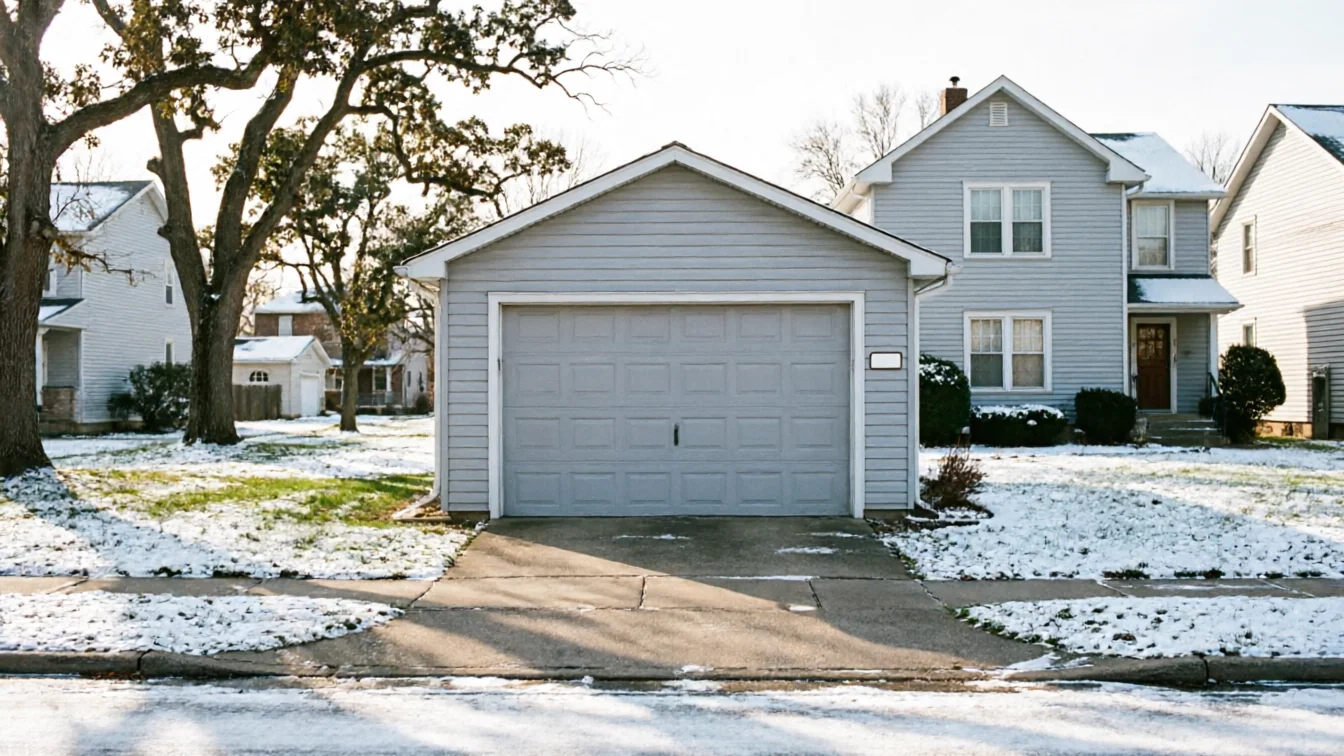
Walk a few blocks in Lombard and you'll see both setups: an attached garage sharing a wall with the house, or a detached one sitting out back with its own roofline. Most of the housing stock here went up between 1938 and 1998, with the median build year landing around 1973, so you've got a real mix of eras and a real mix of garage types to match. An attached garage from that period usually shares some heat with the house through the connecting wall or the door into the mudroom. A detached garage gets none of that. It sits at outdoor temperature all day, which matters more than most owners realize until a spring snaps on a January morning and they can't figure out why it happened to the detached unit and not the one off the kitchen.
The door hardware itself doesn't know which kind of garage it's bolted to. A torsion spring is a torsion spring. But the environment around it - how cold it gets, how much it swings, how much moisture collects - is different enough between attached and detached that the wear shows up on different timelines. That's the part worth understanding before you call about a repair.
What Local Conditions Do
Lombard sits in a cold, moderate climate band, which means real freeze-thaw cycling every winter rather than one hard freeze that stays put. An attached garage, especially in houses built mid-century through the 1970s and 80s here, usually holds a buffer of a few degrees from the house next to it. That buffer slows down how fast grease stiffens in the bearings and how brittle the spring coils get on the coldest mornings.
A detached garage has no such buffer. It swings with the outside air, full stop. On a detached unit you'll see rollers bind up faster, torsion springs lose temper sooner, and condensation form on the inside of an uninsulated steel panel when a warm day follows a cold night - something that's common given the age of a lot of this housing. None of that is dramatic on its own, but it adds up over a winter, and it's the reason a detached garage door in this area often needs attention a season or two before an otherwise identical attached one does.
Doing Nothing For Now
If your detached garage door is stiff in January but fine by April, that's not necessarily a problem that needs a truck out this week. A lot of what you're feeling is the cold-weather drag that comes standard with a detached, unheated structure in this climate band - it loosens up on its own once temperatures come back up. What you shouldn't ignore is a spring that's visibly stretched, a cable that's frayed, or a door that drops instead of lowering smoothly, on either an attached or detached garage. Those don't fix themselves with warmer weather.
Here's the honest limit: if a detached garage's door and opener are both original to a house built in the 1970s or earlier, patching one part often just shifts the failure to the next part a season later. At some point replacement costs less over time than another repair call, and we'll tell you when you've hit that point instead of running up a bill on a door that's done.
What It Costs
Cost depends on what's actually wrong and which type of garage you've got, so we're not going to throw a number out here that doesn't mean anything until someone's looked at the door. What we can tell you is that detached garages in this area tend to need spring and roller work on a shorter cycle than attached ones, simply because of the temperature swings described above - so over several years, a detached door can end up costing more in repairs even though the door itself is the same product. That's a planning detail worth knowing before you decide whether to keep patching an older detached unit or put the money toward a full replacement instead.
Frequently asked questions
Why does my detached garage door freeze up more than my neighbor's attached one?
A detached garage has no shared wall with the house, so it sits at outdoor temperature the whole winter. In Lombard's cold, moderate climate that means more freeze-thaw cycling on the springs and rollers than an attached garage gets, which is why it binds up sooner on cold mornings.
Is my garage door old enough that I should expect problems?
Housing in this area was mostly built between 1938 and 1998, with a lot of it dating to the 1960s and 70s. If your door and opener are original to a house from that era, especially on a detached garage, you're in the range where springs and hardware start failing more often.
Does it cost more to fix a detached garage door than an attached one?
The parts and labor are the same either way, but detached garages in this climate tend to need spring and roller work more often because they don't get any heat buffer from the house. Over a few years that can add up to more total repair cost on the detached side.
Should I insulate my detached garage door?
It can cut down on the condensation and temperature swing that wear out hardware faster, particularly on older uninsulated steel doors common in this area's housing stock. We can talk through whether it makes sense for your specific door when we're out.
Related garage door services in Lombard
More garage door guides
Book garage door service in Lombard
Call now or request a quote - tell us what the door is doing and where you are.