
Lombard, IL · Garage Door Service
Why So Many Lombard Garages Still Have Uninsulated Doors
Most Lombard homes were built between 1938 and 1998, before current insulation codes. Here's what that means for your garage door and opener today in Lombard.
- Repairs & new doors
- Springs & openers
- Serving 8 nearby communities
What Is Going On
Lombard's housing stock mostly went up between 1938 and 1998, with the median build year landing around 1973. That one number explains a lot of the service calls we get. A door hung in 1973 was built to the standards of 1973 - a single layer of steel or wood, no foam core, no thermal break at the track. Across this part of DuPage County, the pattern repeats across dozens of named areas: 1960s and 70s construction, original hardware still bolted to original framing in a good share of houses.
That's not a defect. Nobody building a garage door in 1968 was thinking about R-value because the code didn't ask them to. The issue shows up now, decades later, when that same door is still the one separating a heated or semi-heated garage from a Midwest winter. The steel panel itself is the weak point, not just the weatherstripping around it. You can replace every seal on a door like that and still feel the cold radiating off the panel on a January morning. Knowing the age of the door you're dealing with changes what's worth fixing versus replacing, and in Lombard that age is almost always tied back to that 1938-1998 build window.
What Local Conditions Do
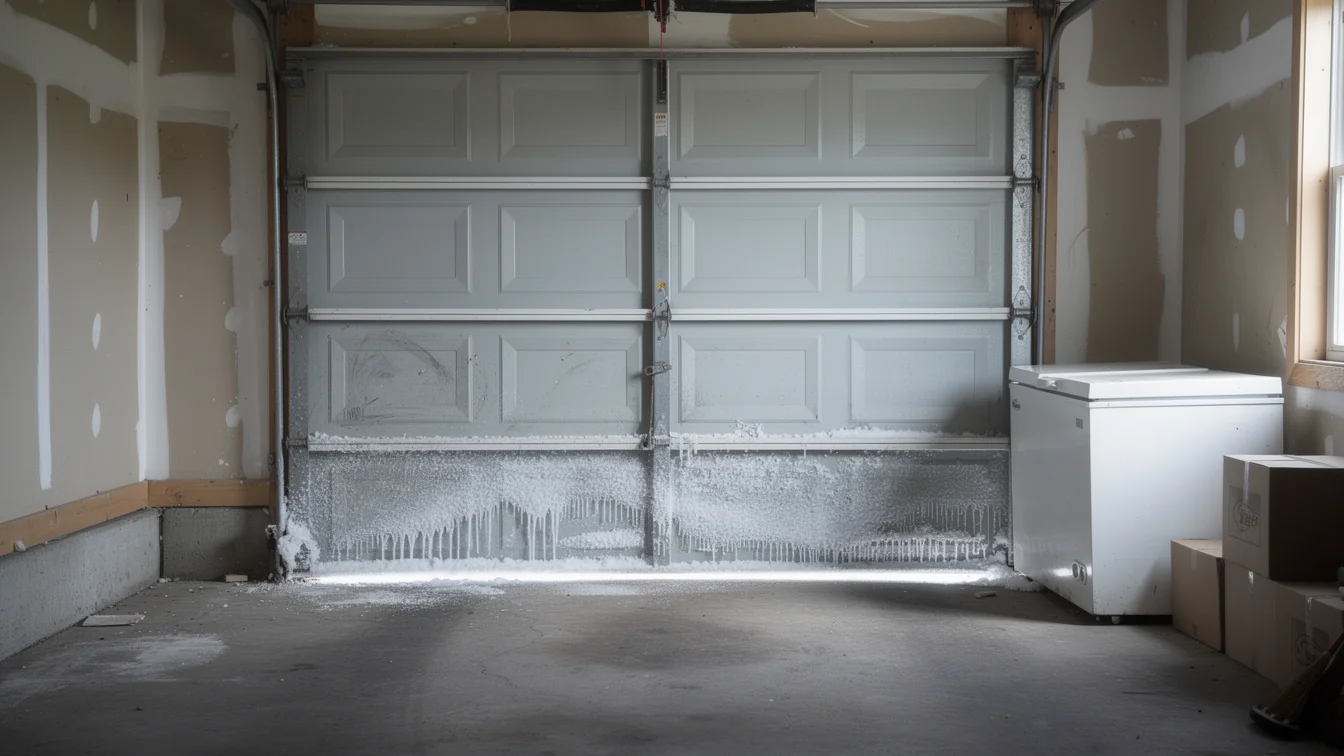
Lombard sits in a cold, moderate climate band, and that matters more for an uninsulated 1970s-era door than it would somewhere milder. A single steel skin with no foam backing doesn't just let cold in - it conducts it, so the inside face of the door can run close to outdoor temperature on the coldest stretches of winter. That drives condensation on the inside of the panel and on any metal hardware, which over years works on springs, hinges, and track bolts that are already old.
Cold also stiffens nylon rollers and thickens old grease in the opener's drive system, so a door that's marginal in October can start sticking or binding once temperatures drop. None of this is unique to one house - it's what a cold climate does to any door built without insulation in mind, and it's why a lot of the original doors from Lombard's 1960s-70s building boom are the ones calling us in winter, not summer. The fix isn't always a new opener. Sometimes it's just recognizing that the door, not the motor, is the part fighting the weather.
Doing Nothing For Now
Here's the honest part: not every pre-1998 door in Lombard needs to come off the hinges tomorrow. If the panel is solid, the springs are cycling fine, and you're not trying to heat the garage, an uninsulated original door can keep doing its job for years yet. We're not going to tell you a 50-year-old door is an emergency when it isn't.
Waiting does have a cost, though, and it's worth naming. Hardware from that era - springs, cables, the occasional original wood jamb - is at the end of its practical life even if it hasn't failed yet. When a torsion spring that old breaks, it usually takes a cable or a drum guide with it, turning a planned repair into an unplanned one. And every winter without insulation is a winter of heat loss through that panel, which adds up whether or not you ever notice it on a bill. If the garage is attached and you use it for anything other than parking, the math on waiting changes. If it's a detached garage you open twice a day, there's less urgency.
What It Costs
We're not going to quote a number here that doesn't apply to your door, because the range on a project like this is wide. A torsion spring swap on an original 1970s door is a different job than pulling the whole door and hardware because the jamb has shifted over fifty years. Panel count, door width, and whether the opener needs attention too all move the total.
What we can tell you is what drives the decision. Across the service area - roughly 253,526 owner-occupied houses, most built in that same pre-1998 window - the choice usually comes down to repair-and-patch versus full replacement with an insulated door. Repair makes sense when the frame and track are square and the hardware is just worn. Replacement makes more sense once you're also trying to fix the insulation problem, because retrofitting foam into an old steel skin isn't really a thing - you're better off with a door built with it in. Median household income in this area runs higher than a lot of neighboring towns, which is worth knowing only in that it affects what repair-versus-replace conversations usually look like here, not in setting a price.
Frequently asked questions
Is my garage door too old to repair?
Age alone doesn't tell you that. A lot of doors from Lombard's 1960s-70s building years are still structurally fine - it's the springs, cables, and seals that wear out first. If the panel isn't dented or delaminating and the track is still straight, repair is usually the right call before replacement.
Why is my garage so cold in winter even with the door shut?
Most original doors from this era are a single layer of steel or wood with no foam core, so the panel itself conducts outdoor cold straight through. New weatherstripping helps around the edges but won't change what the panel does in the middle. That's a door problem, not a seal problem.
Should I insulate my existing door or just replace it?
Retrofitting insulation onto an original uninsulated steel panel isn't practical - there's no cavity to fill correctly. If cold is the main issue, a new insulated door usually solves it better than trying to add insulation after the fact.
Related garage door services in Lombard
More garage door guides
Book garage door service in Lombard
Call now or request a quote - tell us what the door is doing and where you are.