
Lombard, IL · Garage Door Service
Why Your Safety Sensors Keep Drifting Out of Alignment
Lombard's 1960s-1980s houses mean original garage door openers whose safety sensors drift with age, cold, and settling - here's what that means for your door.
- Repairs & new doors
- Springs & openers
- Serving 8 nearby communities
What Is Going On
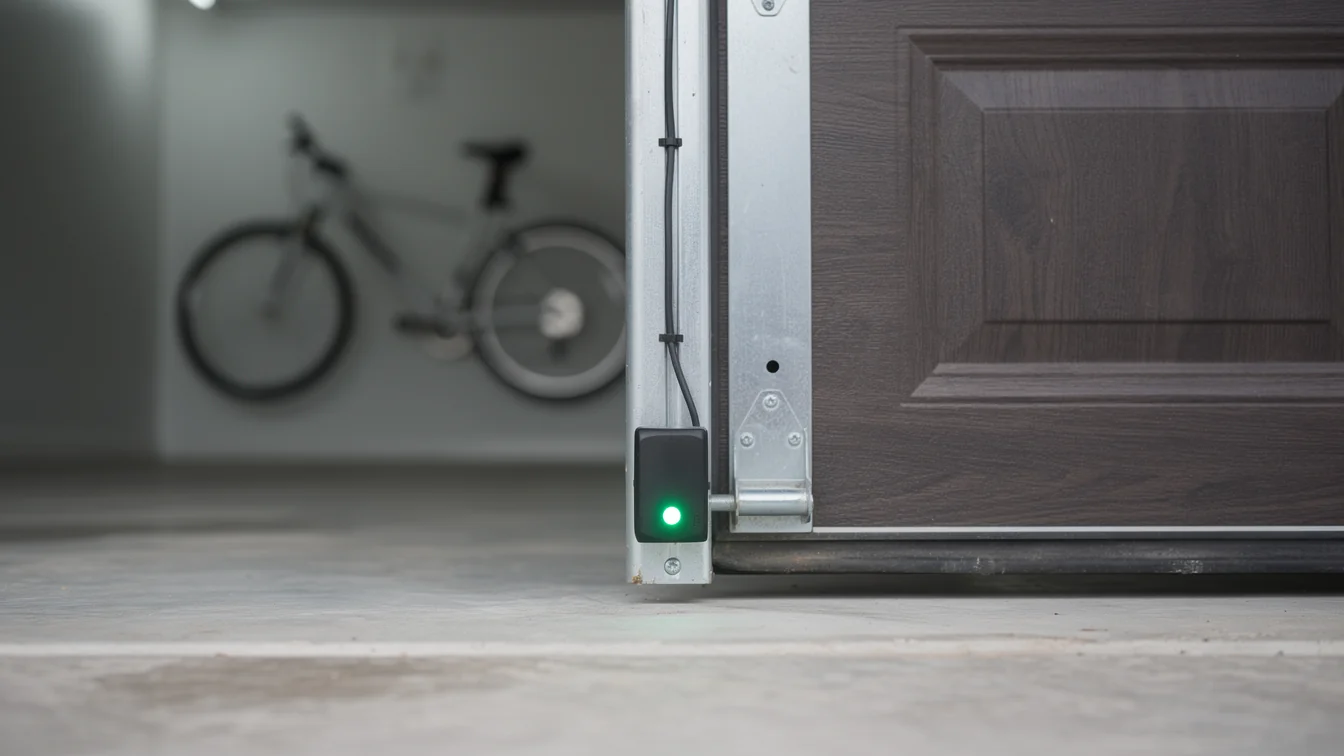
Most houses in this part of DuPage County went up between 1938 and 1998, with the median landing around 1973. That one number explains more about sensor drift than anything a manual tells you. Those garage door opener brackets were screwed into door jambs and track supports that were new then and have been settling, shrinking, and shifting ever since. The two photo-eye sensors - one on each side of the track, a few inches off the floor - have to line up within a hair of each other or the opener refuses to close the door, or worse, reverses it mid-swing for no obvious reason.
On a garage built in the 1960s or 70s, which is most of what you'll find across the 87 named areas in this service area, the sensor brackets are usually mounted to the same wood framing the door track hangs from. Wood moves. It moves with humidity, with age, with every winter freeze and spring thaw cycle this region has been through since Nixon was president. The sensors don't break so much as they slowly stop pointing at each other. You notice it as a door that worked fine last month and now blinks an error light for no reason you can see.
What Local Conditions Do
This area sits in a cold-moderate climate band, which means real freeze and real thaw, not a mild wobble. The concrete slab under a garage door track expands and contracts across that cycle every single winter. It doesn't take much - a sixteenth of an inch of slab movement on one side of the opening is enough to tip a sensor's aim just past the point where it can see its partner across the door.
Houses built in the 1938 to 1998 window, which covers almost everything on a typical block here, were framed to the codes and practices of their decade, not to today's sensor-alignment tolerances that didn't exist yet. So you get a mismatch: modern safety sensors, added or upgraded at some point, bolted to framing that was never built with them in mind and has been moving under its own schedule for decades. Add a garage door track that's picked up a bit of rust or a slightly bent rail from the same freeze-thaw cycle, and the sensors have even less margin to work with. This isn't a defect in the sensors. It's what happens when 1970s wood framing meets a winter climate it's lived through fifty times.
Doing Nothing For Now
A door that reverses occasionally instead of closing is annoying, not dangerous, in most cases - the sensors are doing their job, just a little too sensitively. Leaving it alone for a while won't hurt anything if you're willing to walk over and press the button twice. What it will do is get worse gradually as the framing keeps settling, especially after a hard winter.
Here's the honest limit: we can realign sensors and tighten brackets, but if the wood they're mounted to has rotted or the track itself has warped from age, realignment is a short-term fix that will drift again in a season or two. At that point the fix is replacing the bracket or the track section, not just nudging the sensor. We'll tell you which one you're looking at before we do anything, because there's no point charging for a realignment on hardware that's already past the point of holding one.
What It Costs
We don't post a flat number here because sensor work splits into two very different jobs. A straightforward realignment - cleaning the lenses, resetting the bracket angle, checking the wiring - is quick work. Replacing a bracket or a section of track that's warped enough to keep knocking the sensors out of true is a bigger job with parts involved.
Given the age of housing stock in this area, built mostly from 1938 to 1998, we see plenty of garages where the opener itself has been swapped out over the years but the original sensor brackets never were. That mismatch is often the real cost driver - not the sensor, which is a cheap part, but the bracket or framing behind it. We'll look at what you've actually got before quoting anything, because guessing at a price before seeing a fifty-year-old bracket is how people get surprised later.
Frequently asked questions
Why does my garage door reverse right before it closes?
That's almost always the safety sensors sensing something is out of alignment, not actually seeing an obstruction. In houses built in the 1960s and 70s, which is most of what's around Lombard, the brackets holding those sensors are mounted to framing that's shifted over the decades, so the two sensors stop pointing exactly at each other.
Can I fix sensor alignment myself?
Often yes. Loosen the wing nut on each sensor bracket, aim them at each other until the indicator light goes solid, and retighten. If the light won't hold steady no matter how you angle it, the bracket or the wood behind it has probably moved enough that it needs more than a nudge.
Does winter make this worse?
Yes. This area sits in a cold-moderate climate band, and the freeze-thaw cycle each winter moves the slab and framing under your garage door track slightly. That's often when sensors that were fine in October start drifting by February.
Is a sensor problem ever actually an opener problem?
Sometimes. If the sensors are aligned and clean but the door still won't close, the issue is more likely the opener's logic board or the wiring between the unit and the sensors, not the sensors themselves. We'd check both before replacing anything.
Related garage door services in Lombard
More garage door guides
Book garage door service in Lombard
Call now or request a quote - tell us what the door is doing and where you are.