
Lombard, IL · Garage Door Service
Why Your Garage Door Lets In Cold Air in Lombard
Lombard homes built mostly between 1938 and 1998 came with seals that don't hold up to today's winters. Here's what's actually going on and what it costs to fix.
- Repairs & new doors
- Springs & openers
- Serving 8 nearby communities
What Is Going On
Most houses in this part of Lombard were built somewhere between 1938 and 1998, with the typical home here dating to 1973. That matters more than people think when it comes to garage doors. A door and frame from that era came with a thin bottom seal and side weatherstripping that was never designed to last fifty years of expansion and contraction. Rubber hardens, vinyl cracks, and the gap between the panel and the slab opens up a little more every winter.
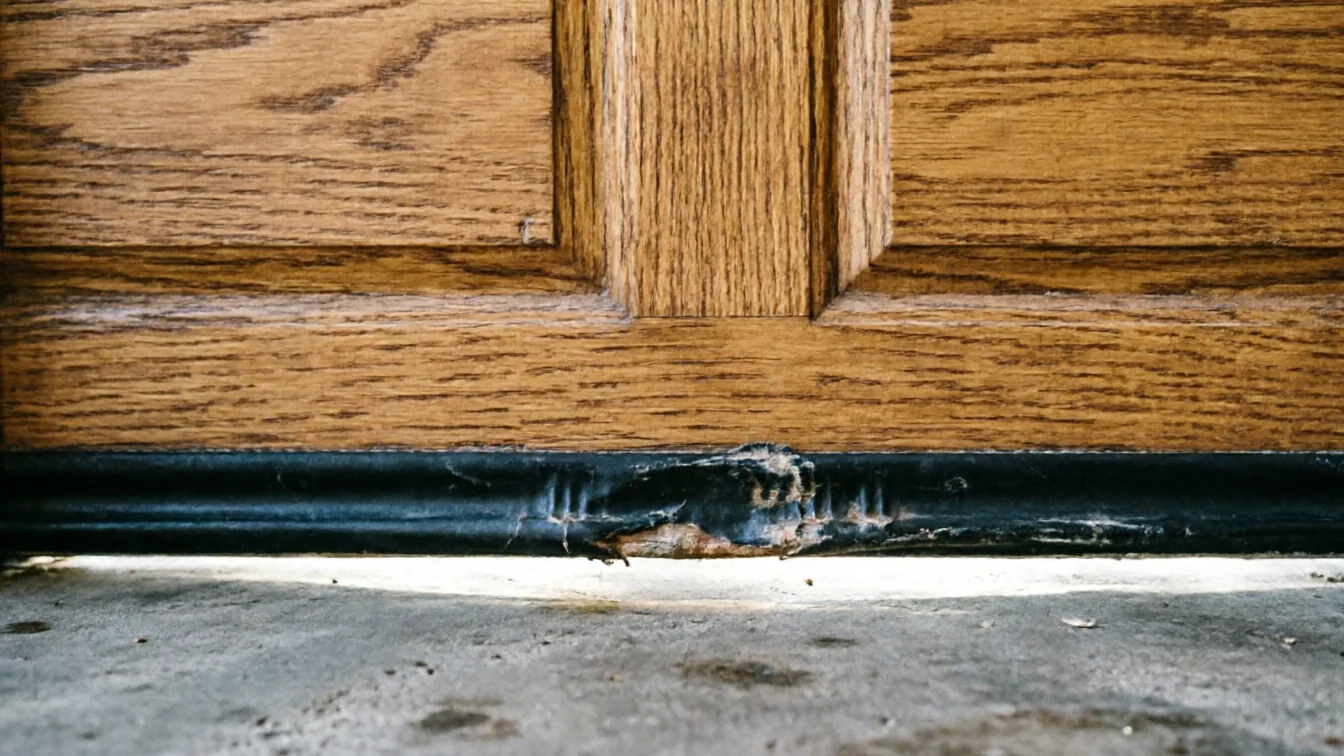
What you're feeling as a cold draft along the garage floor, or seeing as a thin line of daylight under the door, usually isn't a broken door at all. It's a seal that's done its job for decades and finally quit. On older one-piece or early sectional doors common to this vintage of home, the track alignment can also drift slightly as the house settles, which widens the gap further and lets more air through than the seal alone would explain.
This isn't an emergency repair in most cases. It's wear that happens on a predictable schedule tied to how old the house is, not a sign something's about to fail.
What Local Conditions Do
Lombard sits in a climate band classed as cold-moderate, which means real winter cold, real freeze-thaw cycling, and enough swings between wet and dry to stress rubber and vinyl parts harder than a steady climate would. A seal that's merely stiff in October gets brittle by January, and brittle seals crack instead of flexing when the door opens and closes.
That freeze-thaw cycle is also what drives frost heave under slab edges, which can tilt a garage floor just enough that an old seal that fit fine in 1990 no longer makes full contact with the concrete. You end up with weather seals and drafts working against each other instead of together - the seal is there, but the surface it's supposed to meet has moved.
Homes built in the 1960s and 70s stock common across this stretch of DuPage County, Lombard included, tend to share the same low-clearance thresholds, so this isn't a problem limited to one street or one builder. It's a function of the house's age meeting the region's winters year after year.
Doing Nothing For Now
A worn seal by itself usually isn't urgent. If the draft is minor and the door still opens, closes, and locks the way it should, you can reasonably wait a season, especially if money's tight or you're already planning other work on the house. We'll say that plainly: not every drafty garage needs a same-week call.
What changes the math is moisture. A gap that lets in cold air also lets in condensation and, over a winter or two, that moisture reaches wood trim, stored items, or the slab itself. On houses from the 1938-1998 range common here, a lot of that trim is original lumber, and it doesn't take well to repeated freeze-thaw moisture cycling.
The honest limit here: we don't recommend waiting on a seal that's visibly split, pulling away from its track, or letting in enough air that you can see daylight along more than a few inches of the bottom edge. At that point it's a short job, not a project, and putting it off just means doing the same job later with more cleanup.
What It Costs
We don't have a flat number to quote in writing here because seal jobs vary with door width, the type of track your house has, and whether the bottom astragal needs replacing along with the side and top weatherstripping. What we can say is that a seal and weatherstrip job is a small fraction of what a full door replacement runs, and it's usually finished in a single visit.
Households in this service area have a median income of $95,738, and most of the seal and weatherstrip calls we get fall well within a routine home-maintenance budget rather than a major expense. It's one of the more affordable fixes we do, which is part of why it gets put off - it rarely feels urgent until the draft under the door is noticeable on a cold morning.
If your door is original to a 1960s or 70s build and has never had the seals replaced, it's worth getting a look before you assume the fix is bigger than it is.
Frequently asked questions
My garage door is from the 1970s - is the seal even replaceable, or do I need a new door?
In almost every case the seal is replaceable on its own. Bottom astragal and side weatherstripping are standard parts that fit most track widths from that era. A full door replacement only makes sense if the panels themselves are warped, rusted through, or the track is bent beyond adjustment.
Why does cold air come through the bottom even though the door looks closed all the way?
On older one-piece and early sectional doors, slab settling and frost heave can tilt the floor slightly under the seal, so the seal no longer makes full contact even when the door is fully down. The fix is usually a seal replacement combined with a track check, not a new door.
Is this worth fixing before winter or can it wait until spring?
If the gap is small, waiting is reasonable. If you can see daylight along more than a few inches of the bottom edge, or the seal is cracked and peeling, it's worth doing before the cold sets in, since moisture getting past a bad seal causes more damage over a freeze-thaw winter than in a mild one.
Related garage door services in Lombard
More garage door guides
Book garage door service in Lombard
Call now or request a quote - tell us what the door is doing and where you are.