
Lombard, IL · Garage Door Service
Why a Door Goes Off Track in Lombard
Lombard's older housing stock and cold-moderate winters put real stress on garage door track. Here's what actually knocks a door off the rail and what to do about it.
- Repairs & new doors
- Springs & openers
- Serving 8 nearby communities
What Is Going On
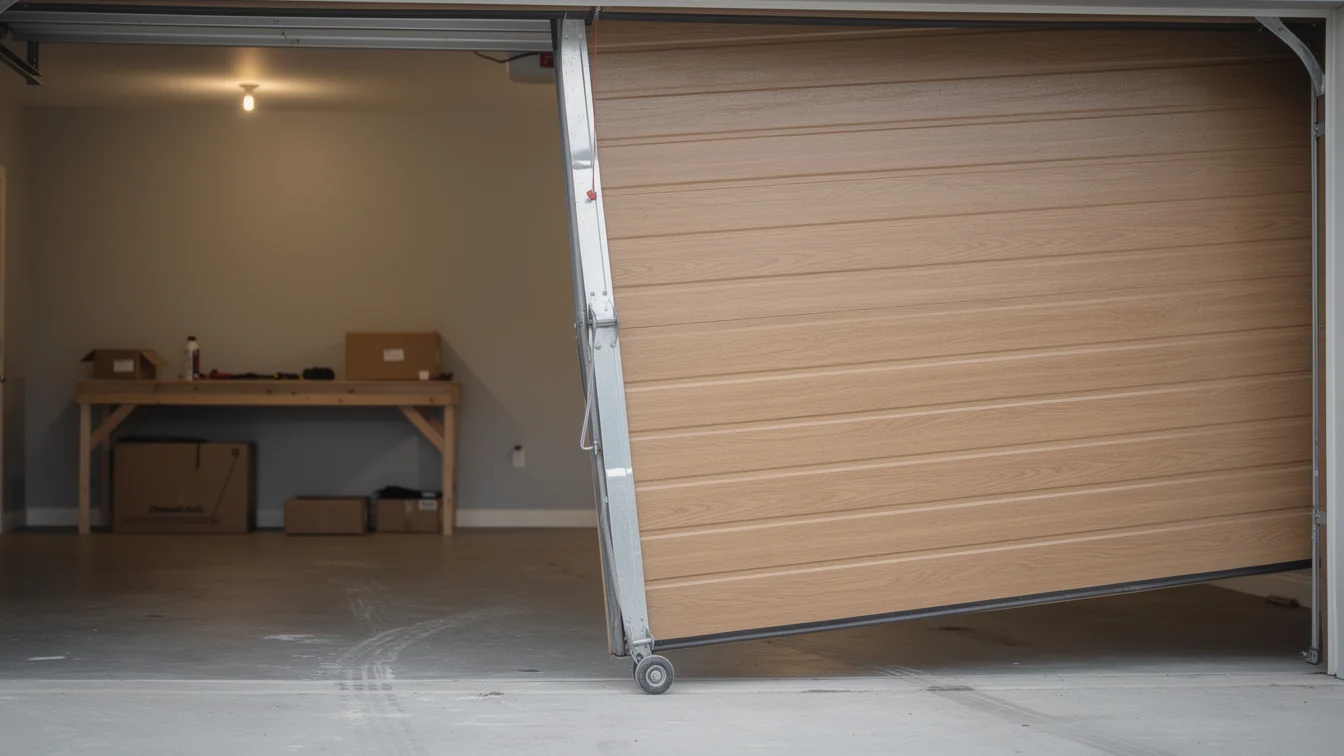
When a garage door goes off track, the rollers have left the channel the track is built to hold them in. Sometimes it's one roller hanging out at a weird angle. Sometimes the whole door has walked sideways and jammed against the frame. Either way, the door stops moving smoothly, and forcing the opener to keep trying usually bends the track worse or snaps a cable.
Most of the time it isn't one dramatic event. It's a roller that's been riding loose in a worn track groove for months, finally popping free on a cold morning when the metal is stiffer and less forgiving. Houses in this part of DuPage County mostly went up between 1938 and 1998, with the median build year sitting at 1973, which puts a lot of garage doors here on track hardware older than the homeowner living with them.
A door that's fifty years old is running on galvanized track that's thinner than anything sold today, and thin track bends under sideways force instead of bouncing back. Once it bends even a little, every roller that passes through that spot gets pushed a little further off true, and the problem compounds every time the door cycles.
What Local Conditions Do
The cold-moderate climate band here means winter swings that take a garage from above freezing to well below it in the same week, and that kind of swing is what loosens track bolts set in concrete that heaves a little every year. Freeze and thaw doesn't just crack driveways. It works on the slab under your garage floor too, and the track brackets are lagged into studs that sit on that same foundation.
With most of the stock dating to the 1960s and '70s, the rollers in a lot of these doors are the original steel kind, not nylon, and steel rollers wear a groove into the track that eventually lets the door jump the rail. Cold makes steel rollers harder and louder, and a hard roller in a worn groove has less to hold it in place than a nylon one would.
Temperature isn't the only factor, but on a lot of the service calls we see, it's the trigger that finally pushes a track that was already marginal into a door that won't run straight. A slightly bent track that worked fine in August can bind hard in January because the metal has less give.
Doing Nothing For Now
You can live with a door that's slightly off track for a little while if it still opens and closes without grinding or slamming. That's the honest limitation here: we're not going to tell you every off-track roller is an emergency, because it isn't. Some doors run crooked for weeks before anyone calls.
What changes that math is the cable. A door riding off track puts uneven tension on the lift cables, and a cable that frays under that load can let a panel drop fast. If you hear new grinding, see daylight between the roller and the track, or notice the door hanging unevenly when it's halfway up, that's the point where waiting stops being a reasonable bet.
In a service area built mostly before 1998, replacement brackets for some of these older track setups aren't something the big box stores carry, which means a quick DIY fix can turn into an order-and-wait situation. That's worth knowing before you pull the track off yourself on a Saturday.
What It Costs
We don't have a flat number to put on this page that would hold true across every door, every track length, and every opener brand in the area, so we're not going to invent one. What we can tell you is what drives the cost up or down: whether it's one bent section of track or the whole run, whether rollers need replacing alongside it, and whether the door came off track because of a worn part or because something hit it.
A straightforward roller swap and track realignment is a different job than pulling bent track and resetting brackets into concrete that's shifted. The second one takes longer and costs more, which is part of why catching this early, before the bend compounds, keeps the bill smaller.
If you want a real number, that means someone looking at the actual track and the actual bend. We'd rather tell you that than quote a range that doesn't mean anything once we're standing in your garage.
Frequently asked questions
Can I push a garage door back onto its track myself?
You can sometimes snap a roller back into the channel by hand if the track isn't bent, but the door should be disconnected from the opener and fully supported first. If the track is bent even slightly, forcing a roller back in just puts it in the same spot it fell out of. We'd rather you call than end up with a dropped panel.
Is an off-track door always a broken spring?
No. A door can run off track with the spring in perfectly good shape, usually from worn rollers or a bent section of rail. But an off-track door puts odd tension on the cables and spring system, so a problem that starts as a track issue can turn into a spring or cable failure if it's left alone.
Why does this happen more in winter?
Cold makes the steel in the track and rollers stiffer and less forgiving, so a spot that was marginally worn or bent in warmer months is more likely to let a roller slip free once temperatures drop. It's not that cold causes the wear, it's that cold exposes wear that was already there.
Related garage door services in Lombard
More garage door guides
Book garage door service in Lombard
Call now or request a quote - tell us what the door is doing and where you are.