Lombard, IL · Garage Door Service
Is Your Lombard Garage Door Worth Fixing or Done For Good
Lombard homes built between 1938 and 1998 often carry original torsion hardware. Here's how to judge whether your door is worth repairing or ready for replacement.
- Repairs & new doors
- Springs & openers
- Serving 8 nearby communities
What Is Going On
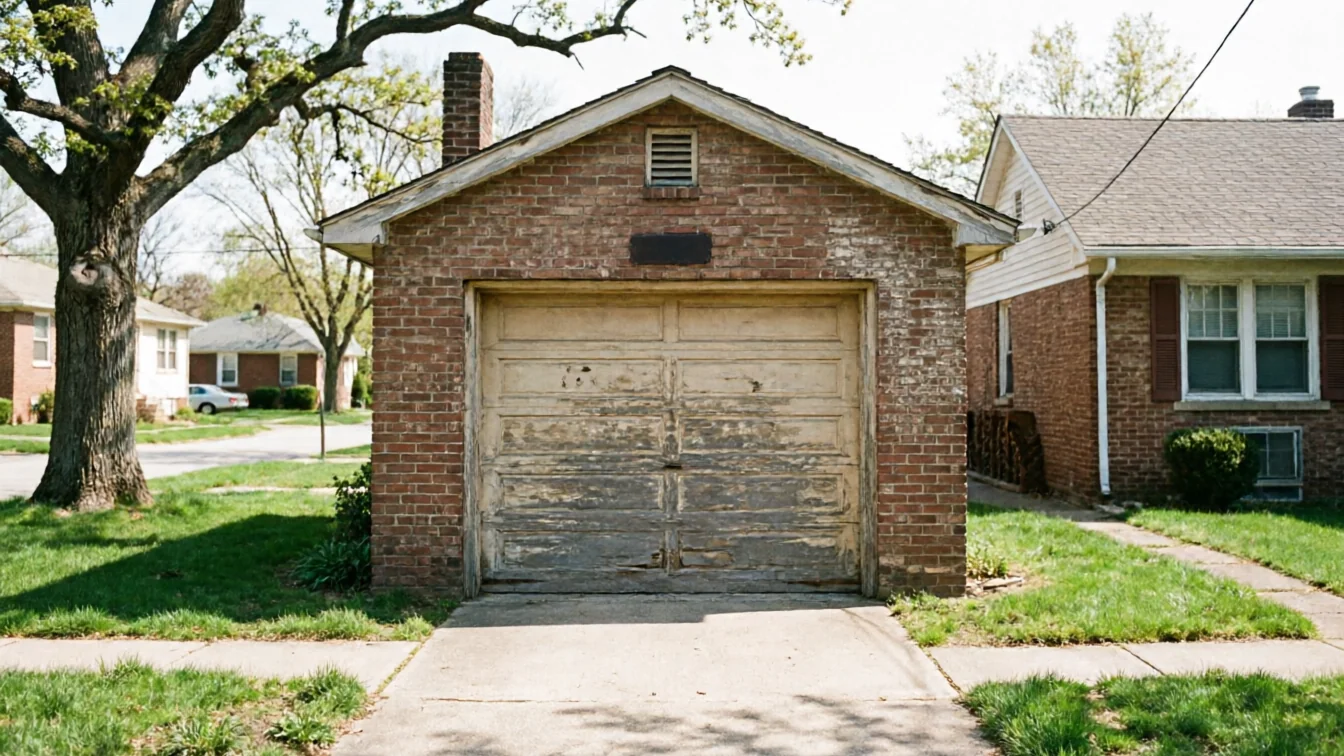
Most of the garage doors we get called out on in Lombard went up somewhere between 1938 and 1998, with the bulk of that stock dating to the 1960s and '70s. That matters because a door built in that window almost never matches what's on the shelf today. The panel gauge is different, the track width is different, and a lot of these doors are still running on the original torsion spring and a drum-and-cable setup that was standard then and isn't stocked the same way now. When a spring on one of these snaps, or a cable frays, the question isn't just "can we fix it" - it's whether the rest of the door is worth building a new system around. A door from that era with a sound frame, square track, and panels that haven't rusted through at the bottom can usually take new hardware and run another decade. A door where the bottom panel is crumbling or the track has been bent from a bumped car is a different conversation. We look at the frame and the panels first, because hardware is replaceable and a warped frame is not worth chasing with new parts.
What Local Conditions Do
Lombard sits in a cold, moderate climate band, and that cold is hard on garage door hardware in specific ways. Steel springs lose some of their flex in winter and are more likely to snap on a cold morning than a mild afternoon - it's usually the first really cold stretch of the season that breaks a spring that's been weakening quietly for months. Weatherstripping on older doors dries out and cracks in that same cold, and once it cracks it stops doing its job, which lets cold air and moisture into the garage along the bottom seal. Openers with original nylon gears also get more brittle with age and cold cycling, and that's often the quiet failure - the door looks fine but the opener starts grinding before it stops working outright. None of this means a door needs replacing just because winter is coming. It means the hardware that's original to a house built decades ago is the hardware most likely to give out on the first real cold snap, and that's worth checking before it does.
Doing Nothing For Now
Waiting is sometimes the right call. If your door is operating smoothly, the spring tension feels even, and nothing is grinding or sticking, there's no reason to replace a door just because it's old. A lot of the doors we see on 1960s and '70s Lombard houses are still doing their job fine with nothing more than fresh lubrication and a cable check. Here's the honest limit: once a torsion spring is visibly stretched, rusted, or has a gap in a coil, waiting doesn't save you money - it just moves the failure to a worse moment, usually when the door is stuck halfway open with a car underneath it. Same goes for a bottom panel that's soft or flaking at the corners. That's not a wait-and-see repair, that's a panel that's going to fail at the hinge eventually. If your door is quiet and smooth, leave it alone. If it's groaning, slow to close, or the spring looks tired, that's not a problem that improves with another winter.
What It Costs
We don't quote a repair or a replacement without seeing the door, because the gap between a spring swap and a full door-and-track replacement on a 1960s or '70s Lombard house is wide, and it depends on what's actually underneath the panels - rusted track, a bent drum, a frame that's shifted. What we can tell you is that a door with original hardware from that era usually needs more than a single part once we're in there, because the spring, the cable, and the pulleys were all installed at the same time and wear at roughly the same rate. That's not us upselling - it's the nature of hardware that's forty-plus years old. The service area runs a median household income around $95,738, and we price jobs to be worked through plainly on-site rather than guessed at over the phone. If a repair would cost close to what a new door runs, we'll say so and let you decide; we're not going to talk you into saving a door that isn't worth saving.
Frequently asked questions
My house in Lombard was built in the 1960s - is my garage door original?
It's possible. A lot of Lombard homes went up in the 1960s and '70s, and plenty still have their original torsion spring and track setup. The giveaway is usually a single wide spring across the top of the door rather than two shorter springs on either side of the track - that older single-spring layout is common on doors from that window.
Is it the cold making my spring break, or is it just old?
Both, usually. Cold steel is less forgiving under tension, so a spring that's already fatigued from decades of cycling is more likely to let go once temperatures drop. A spring in good shape generally tolerates a cold Lombard winter fine - it's the ones already near the end of their life that pick the coldest week to fail.
Should I replace the whole door or just fix the spring?
Depends on the panels and the track, not just the spring. If the frame is square and the panels are solid, a spring and hardware repair is usually the right call. If the bottom panel is soft, rusted, or the track's been bent, you're better off putting the money into a full replacement instead of patching a door that's failing in more than one place.
Related garage door services in Lombard
More garage door guides
Book garage door service in Lombard
Call now or request a quote - tell us what the door is doing and where you are.