
Lombard, IL · Garage Door Service
Repair or Replace: A Lombard Guide to Aging Garage Doors
Lombard homeowners with 1960s-70s garage doors face a choice: keep patching worn hardware or replace it. Here's how to know which makes sense for your house.
- Repairs & new doors
- Springs & openers
- Serving 8 nearby communities
What Is Going On
In Lombard, most of the housing stock went up between 1938 and 1998, with the typical house here dating to 1973. The bulk of it landed in the 1960s and 70s building boom that filled this corner of DuPage County along with 87 other named areas nearby. That means the garage door on a lot of these houses is either the original unit or the first replacement, and both are well past the point where parts are an easy match. A torsion spring wound for a door built in 1973 doesn't match what's on the truck today, and a steel panel door from that era often used a gauge of steel and a track width nobody stocks as a direct swap anymore.
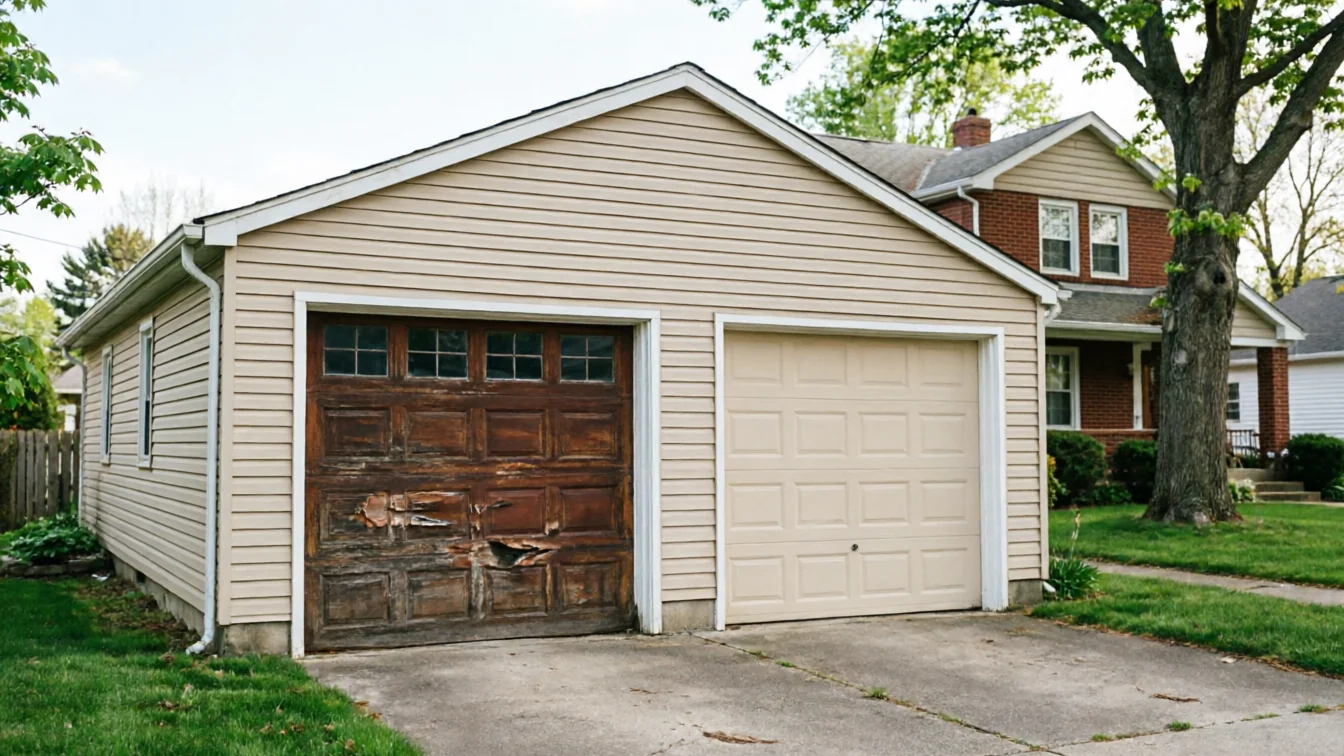
We can true up an old track or swap a spring on most of these doors, and that's the right call more often than not. But once the frame itself has rusted through at the bottom corners or the panel seams have separated, patching it just buys another winter, not another decade. That's the line worth watching for, not a calendar date.
What Local Conditions Do
Lombard sits in a cold-moderate climate band, which means the garage door on your house goes through a real freeze-thaw cycle every winter, not just a few cold mornings. Steel contracts hard in January and expands again by March, and on a door that's 40 or 50 years old, that cycle works at the seams in the weatherstripping, the welds in the bottom bracket, and the galvanized coating on the torsion spring itself. Grease that was fine in August turns thick in a cold snap, which is part of why openers on older doors start groaning or stalling partway up once the temperature drops.
None of this means the door is doomed on a schedule. A well-maintained door from the same era can keep running fine for years with the right lubrication and a spring that's been kept in proper tension. What the climate band does is set the pace of wear - it's the reason a 1973-era door in this area tends to show cable fraying and hinge cracking sooner than the same door would in a milder climate, not a reason to replace on sight.
Doing Nothing For Now
Waiting isn't automatically the wrong move. If the door still opens and closes square, the spring holds tension, and the only issue is a little noise or a slightly slow roll, there's no reason to spend money today. The risk with the 1960s-70s stock that makes up so much of Lombard's housing is that a torsion spring under full tension doesn't give much warning before it goes, and when it does, the cable or the bottom bracket can go with it.
With a median household income of $95,738 across the service area, most owners here can absorb a scheduled replacement bill more easily than an emergency one at 7pm on a Saturday when a spring finally lets go. That's the real cost of doing nothing: not that the door fails, but that it tends to fail on its own schedule rather than yours. If your door is already groaning, dropping unevenly, or the spring looks rusted through at the coils, that's the point to stop waiting and get it looked at rather than keep running it.
What It Costs
We're not going to quote a number here that doesn't hold up - every one of these doors is a different age, a different track width, and a different opener, and pricing it over the phone does nobody any favors. What we can tell you is what drives the cost up or down. Because so much of Lombard's stock sits in that 1960s-70s band, the labor to source a matching track or a wider header bracket runs higher than it would on a newer build, since standard modern hardware often doesn't bolt straight onto a 50-year-old frame without adjustment.
A straight spring swap on a door that's otherwise sound is the cheapest fix there is. Replacing the whole door, track, and opener because the frame has rusted or the panels have delaminated costs more, but it also stops the repeat visits. The honest answer is that we have to see the door, the track, and the opener in person before we can tell you which side of that line you're on.
Frequently asked questions
How do I know if my Lombard house still has its original garage door?
If your house was built close to 1973 - the median build year for homes in this area - and the door has never been replaced that you know of, there's a good chance it's original or close to it. Look for a steel panel door with visible seams rather than a smooth modern insulated panel, and a torsion spring mounted on a single shaft above the door rather than two separate springs.
Does Lombard's winter cause more spring failures?
The cold-moderate climate band this area sits in puts garage door hardware through a real freeze-thaw cycle every year, and that cycle is harder on an older spring's coating and tension than a mild climate would be. It doesn't guarantee failure, but it does mean springs on older doors here tend to show rust and fatigue sooner than the same part would elsewhere.
Is it worth repairing a door from the 1960s or 70s?
Often, yes. If the frame is straight and the panels aren't rusted through, a spring, cable, or roller repair is usually cheaper than full replacement and can keep the door running well. The point to stop repairing is when the structural parts - the frame, the track mounts, the panel seams - are failing, not just the moving parts.
Related garage door services in Lombard
More garage door guides
Book garage door service in Lombard
Call now or request a quote - tell us what the door is doing and where you are.